Prestonwood Landscaping
Prestonwood has something most Dallas neighborhoods do not: real trees.
Forty and fifty years of growth, big canopies, streets that actually feel shaded in August. It is the best
thing about these properties, and it is also the reason so many yards here quietly stop working.
Because those trees did not stay the same size. The landscape was designed around saplings, and now
there is a mature canopy over everything. Grass that used to fill in has thinned to dirt. Beds that used to
get sun are in shade all day. Roots have pushed up through the turf, and irrigation heads installed
decades ago are spraying into trunks.
The house still looks good. The yard just stopped keeping up with the property.
Fixing that is not about planting more. It is about redesigning for the yard you actually have now — the
shade, the roots, the drainage, and the standard this neighborhood holds.
That is what we do.
Prestonwood
Landscape design & installation
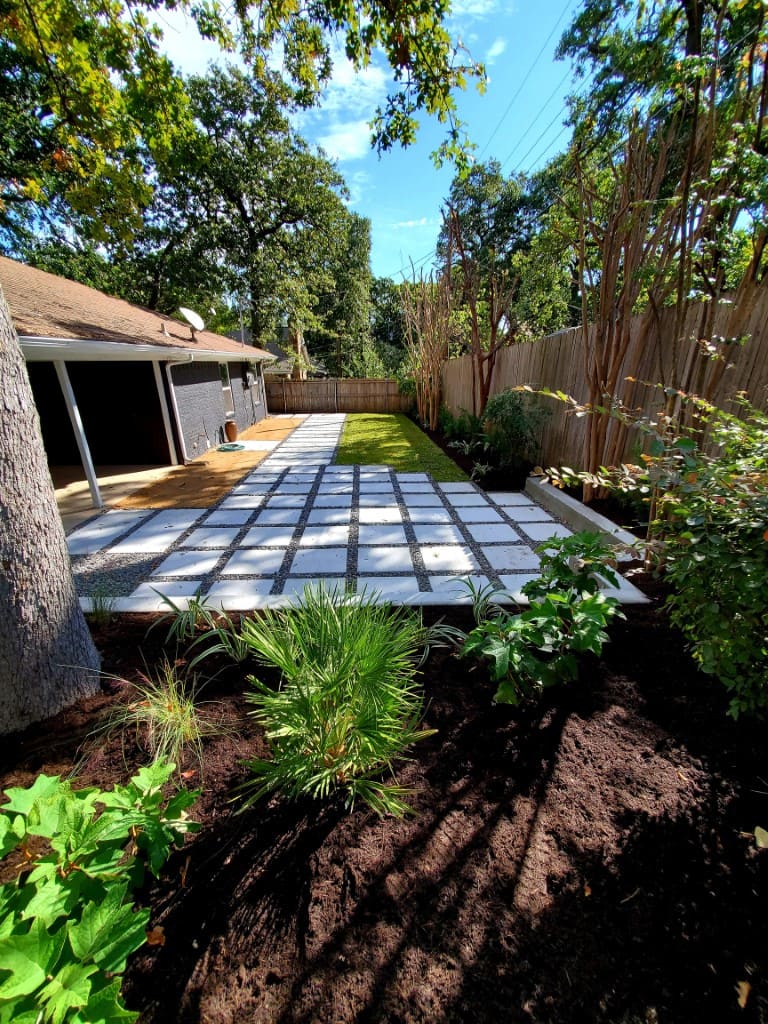
The first thing we usually tell a Prestonwood homeowner is that the bare patches under the trees are not a lawn problem.
You can lay sod there every spring and it will thin out every summer, because turf loses to a mature oak every time — for light, for water, for root space. The fix is a design that stops fighting the canopy and works with it.
That usually means:
- shade-tolerant plantings and ground cover where turf will never hold
- sod installation in the areas that actually get enough sun to support it
- bed lines redrawn around the trees as they are today, not as they were in 1985
- Texas-native and adapted plants that handle both the shade and the heat
- a plan for the whole property instead of patching one bed at a time
Prestonwood
Landscape lighting
This is the service Prestonwood is genuinely built for.
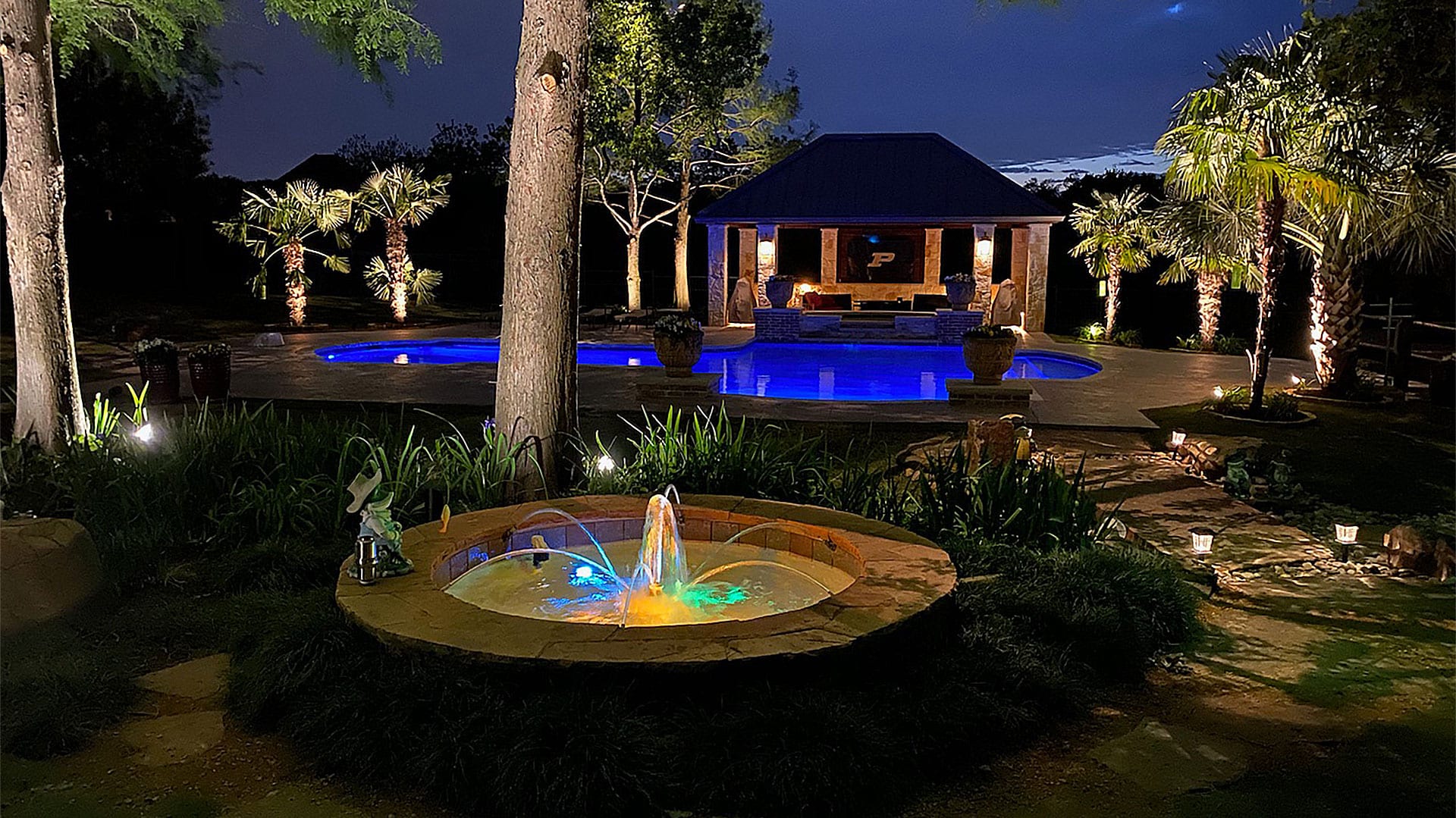
Mature trees are the ideal subject for lighting — uplighting a fifty-year-old canopy does something a new-build yard simply cannot replicate. Layered properly, it changes how the house reads from the street after dark and makes the back of the property usable at night.
The work involves:
- uplighting on specimen trees and architectural features
- path and step lighting along walkways and entries
- lighting layered around patios, water features, and seating areas
- fixtures placed to light the yard, not to glare into it
It is also one of the highest-impact things you can do to an established landscape without tearing it out.
Prestonwood
Hardscaping
Hardscape in an older neighborhood has to answer to what is already there.
The house has a material palette. The trees have a root system. The grade has been settling for decades. A patio that ignores any of those looks wrong immediately, or cracks within a few years.
We are usually working on:
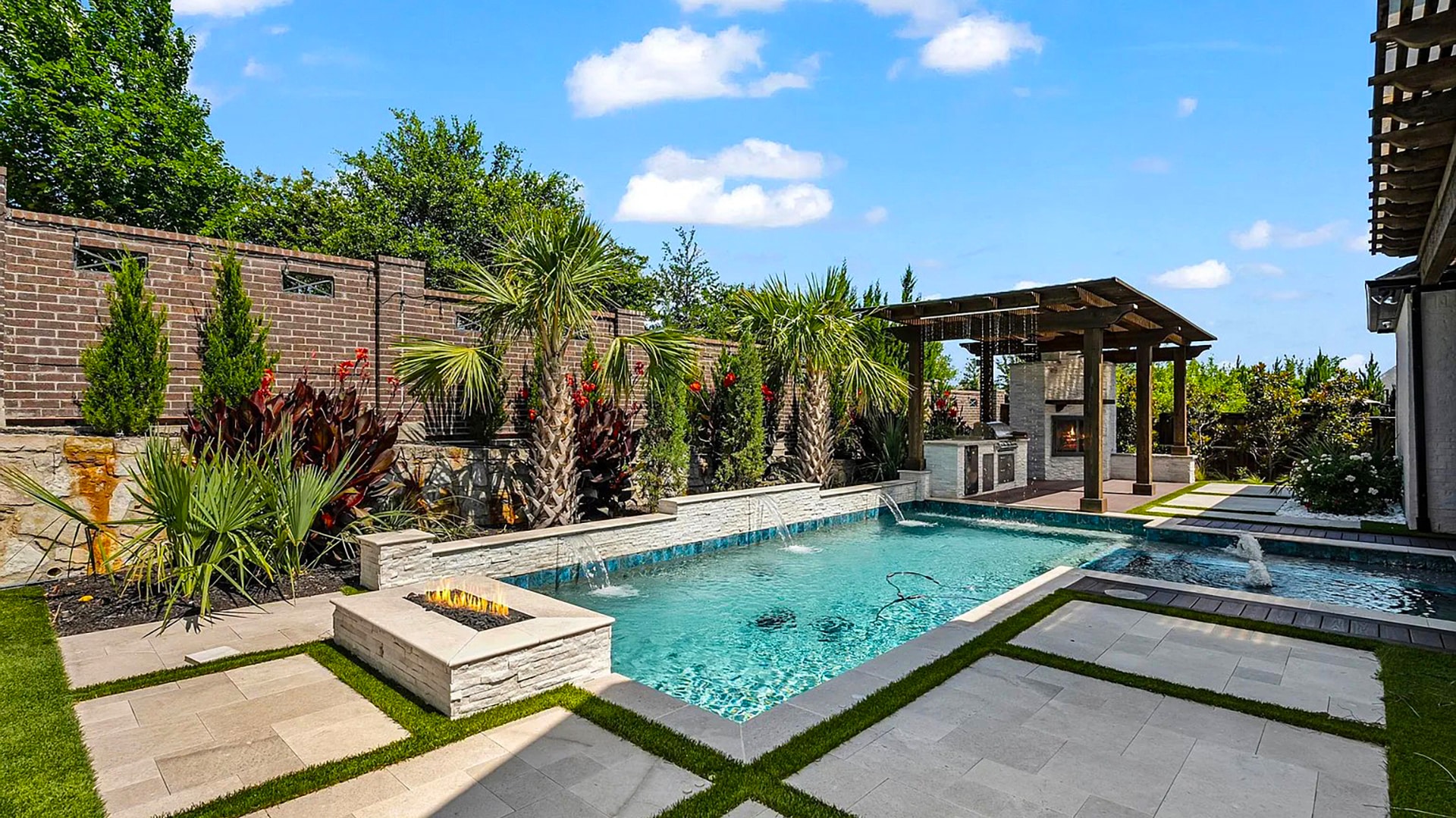
- patios and outdoor living areas sized to how the family actually uses the back yard
- walkways, borders, and steps that tie the front of the property together
- water and fire features with lighting designed around them
- Texas-native and adapted plants that handle both the shade and the heat
- drainage corrections, which older Prestonwood lots frequently need
Placement matters more here than in a newer subdivision. Pouring on top of a mature root system is how you lose both the patio and the tree.
Prestonwood
Irrigation systems
Most irrigation systems in this neighborhood were designed for a yard that no longer exists.
When the system went in, the trees were small and the whole property was sun. Now half of it is shade, which needs far less water, while the sunny half is drying out — and the whole thing is running on one schedule.
So you get the worst outcome: overwatered beds, dry turf, and a high bill.
Bringing a system current means:
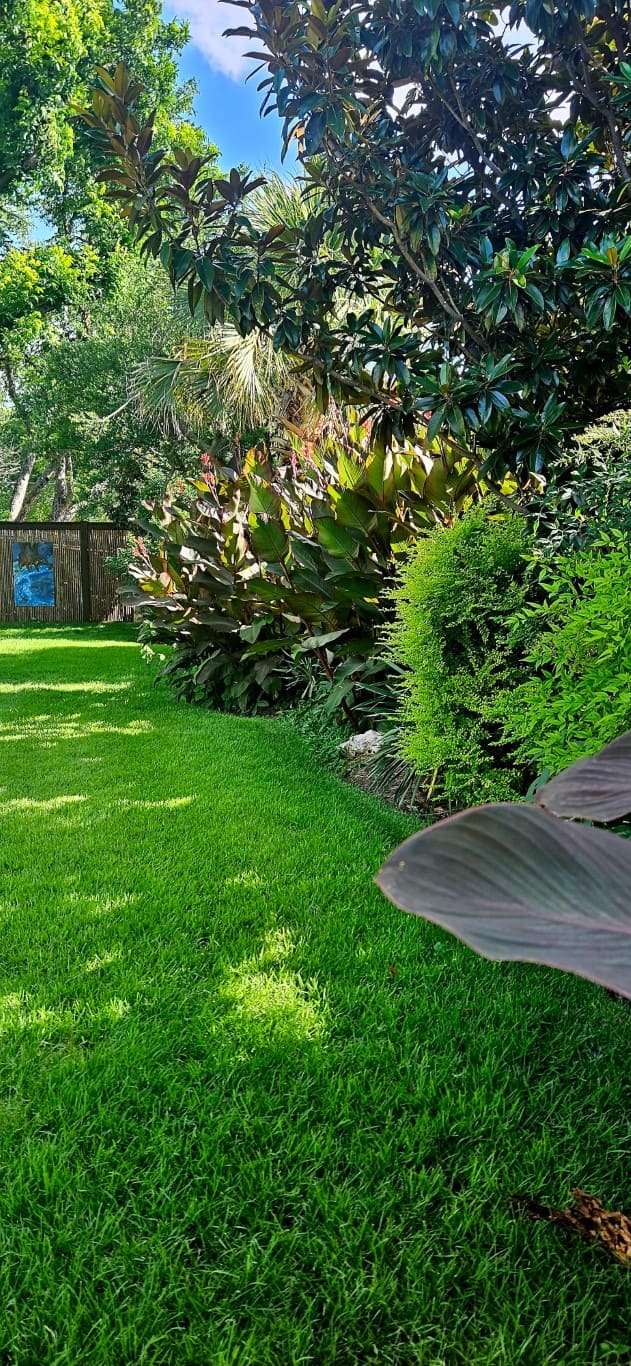
- re-zoning to match today’s sun, shade, and planting
- checking and correcting coverage instead of assuming it
- smart controllers that adjust to weather and watering restrictions
- drip in beds, spray where turf actually needs it
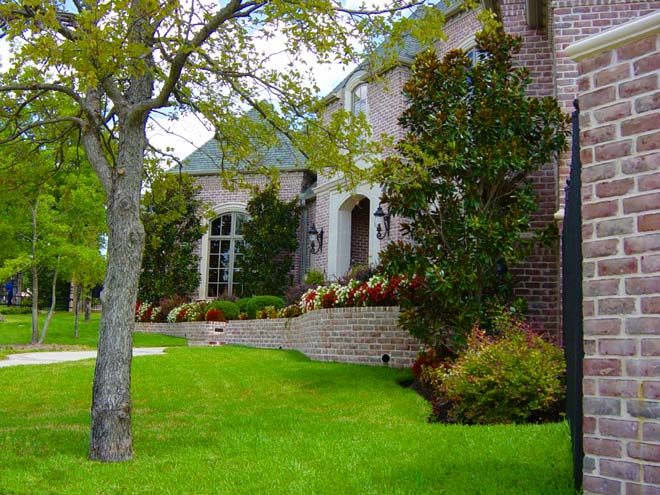
Prestonwood
Lawn care & maintenance
An established landscape needs steadier upkeep than a new one, not less.
Leaf load alone is a different job here — a canopy that size drops enough to smother beds and turf if nobody stays ahead of it. Regular maintenance covers:
- mowing, edging, and seasonal cleanups
- leaf removal, weeding, and mulching
- fertilization on a schedule built for Texas turf and shade conditions
- irrigation checks so small failures do not become dead zones
- bed and shrub care to keep plantings shaped instead of overgrown
The point is that the property looks handled year-round without you managing it.
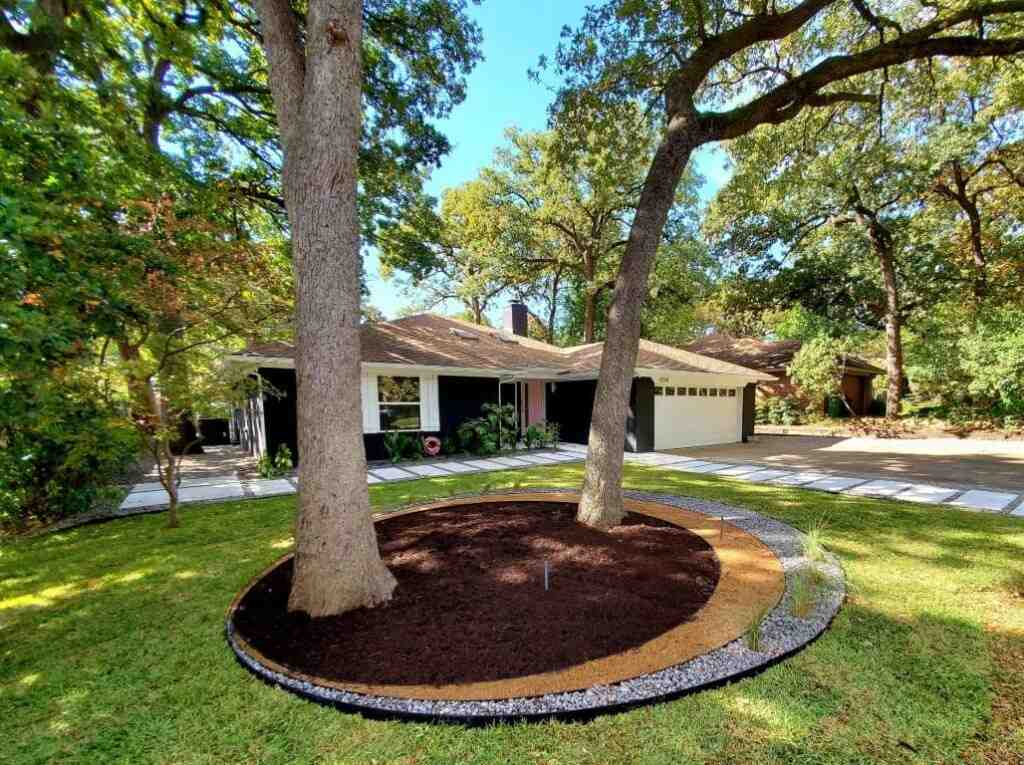
Prestonwood
Lawn care & maintenance
An established landscape needs steadier upkeep than a new one, not less.
Leaf load alone is a different job here — a canopy that size drops enough to smother beds and turf if nobody stays ahead of it. Regular maintenance covers:
- mowing, edging, and seasonal cleanups
- leaf removal, weeding, and mulching
- fertilization on a schedule built for Texas turf and shade conditions
- irrigation checks so small failures do not become dead zones
- bed and shrub care to keep plantings shaped instead of overgrown
The point is that the property looks handled year-round without you managing it.
How we approach it
We have been working DFW landscapes since 1993, and the process starts the same way every time: on
the property, walking it.
Where the sun actually falls. What the root systems allow. Where water goes when it rains. How you use
the yard, and how you want to. The on-site design consultation fee rolls into the installation cost, so the
planning is the first step of the project, not an add-on.
Then we design it once, install it cleanly, and put a maintenance plan behind it.
That does not make an established property simple to redo. It makes it predictable, which is what
matters when the trees you are working around took fifty years to grow.
Prestonwood
If you’re still figuring it out
A lot of Prestonwood projects start with a general dissatisfaction rather than a plan. The yard looks tired, nothing grows where it used to, the back is never used — but the actual fix is not obvious.
That is normal.
The useful first step is figuring out what the property supports today, given the trees, the shade, and the drainage. Once that is clear, the decisions get much easier.
Call 972-466-0345 or book an on-site design consultation to get started.